Shot List and Technical Breakdown, Definition, Filled-In Example and Template
The technical breakdown turns your script into shots you can actually film. How it differs from a storyboard, which columns matter, a filled-in example and a free template.
 Franck Meyer ·
·
9 min read
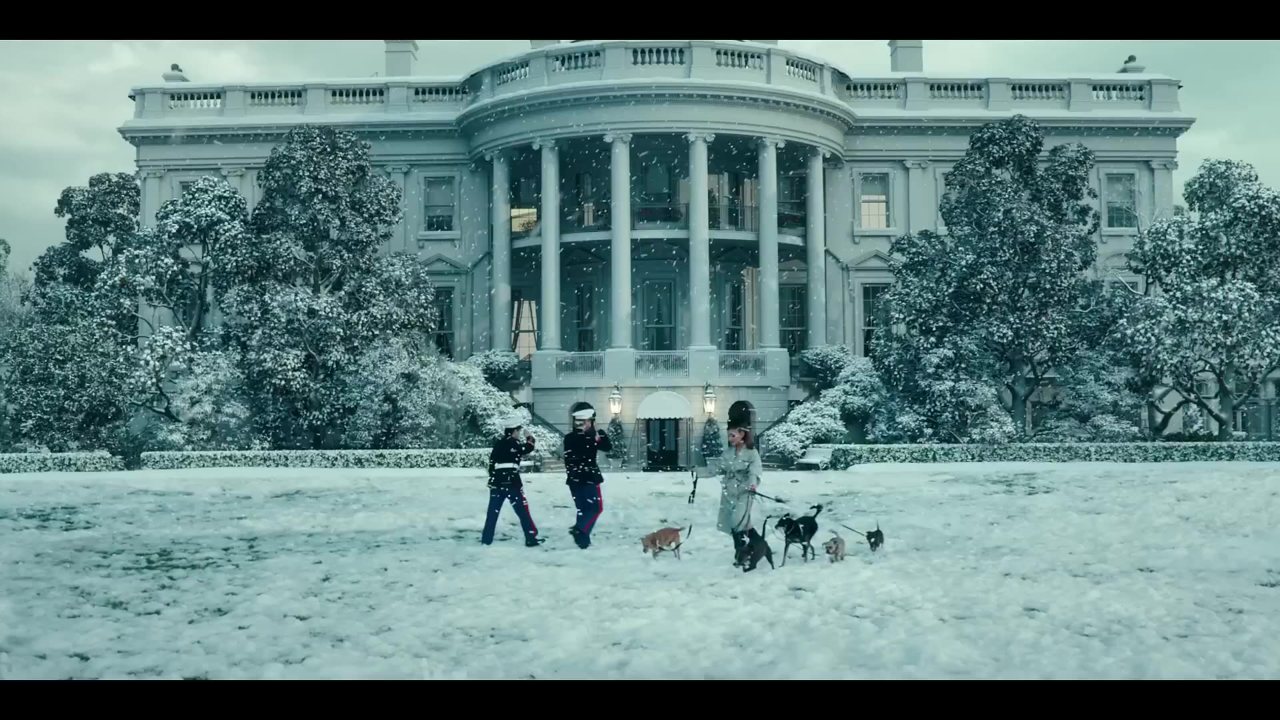
The technical breakdown (découpage technique in French) is the document where your script stops being a story and becomes a list of shots to film. Every shot gets a number, a shot size, an angle, a camera move and a note on what we hear. The script says what happens. The breakdown says how you're going to shoot it.
Film school has a formula for this. The script is the dialogued continuity, the breakdown is the cut-up continuity. One is written in literary language, the other in film language. The director writes it after the script, often with the help of the first AD. That's no accident. The shot numbering feeds straight into the schedule the AD builds.
The principle isn't new. Thomas Harper Ince is credited with requiring a shooting script before filming back in the 1910s, with shots, lighting, framing, camera moves and even title cards. In English we say shot list today, but the French découpage often goes further than a simple list. It also carries sound, matching cuts and intent.
One last point of vocabulary. The breakdown is not the script breakdown (dépouillement). The script breakdown tallies what you need (locations, props, costumes). The shot breakdown organizes the staging. Two documents, two jobs.
The storyboard shows the image, the shot list runs the shoot
You'll still read on some sites that the technical breakdown is "also called a storyboard." That's wrong. Serious sources all tell them apart, and on set the difference shows up fast.
The storyboard draws. It prepares compositions, action, the look of the film. The breakdown describes. It gives the lens, the angle, the move, the sound, everything a drawing transmits poorly. A complex blocking or a sound atmosphere doesn't read on a thumbnail. And crew would rather be handed the focal length than guess it from a sketch.
There's an English-language line I like. The storyboard protects the look, the shot list protects the schedule. Your first AD counts camera setups from the table, not from the drawings, because you can't schedule a drawing. Another advantage of the table is that you can fix it in two seconds during the shoot. A storyboard is more rigid, and nobody wants to redraw three panels at the end of the day when the light is going.
As for the order, opinions differ. Many French schools put the storyboard after the breakdown, as a translation into drawings of choices already made. Other workflows lock the shot list later, once you know what's feasible. My take is that the order depends on the project. On a small film, a partial storyboard is often enough. On an ambitious project, you draw only the critical shots and keep a full table for prep.
Psycho, or how one sentence becomes 53 shots
The best example of the jump from script to breakdown is the shower scene in Psycho (Hitchcock, 1960). In Joseph Stefano's script there was almost nothing. She steps into the shower, someone stabs her. The scene wasn't broken down.
Onscreen, the Caen film club counts 53 shots separated by 52 cuts, a count it says is backed up by the INA. The figure of 78 shots you read everywhere is judged exaggerated there. The shoot took seven days and 70 setups for about 45 seconds of cut-together footage. Janet Leigh summed it up this way. "The shower scene took me a third of the shooting time."
The question is who prepared those shots. Hitchcock gave the storyboard of the scene to Saul Bass, who later claimed he directed the sequence, which Hitchcock's collaborators disputed. The film's Wikipedia page even mentions a storyboard drawn by Hitchcock himself. I won't settle it. What's certain is that nothing was improvised. The story goes that Hitchcock often looked bored on set, because having planned everything, all that was left was to watch the film get made.
You don't need to be Hitchcock to aim for that comfort. A precise breakdown mostly gives you a set where you can focus on the performances instead of hunting for your angles.
The columns that aren't negotiable
There's no standard format. Most of the time it's a landscape table, one row per shot. The minimum they teach in high school is three columns, shot number, image, sound. That's enough for a student short. For a shoot with a crew, you need more.
Here are the ones I consider essential.
- Shot number. Scene, point, shot (3.1, 3.2) or letters (12A, 12B). A reframe is not a new shot.
- Location and effect. Interior or exterior, day or night. You note it at the top of each sequence.
- Subject and action. Who or what the camera focuses on, and what happens, with verbs.
- Shot size. Wide shot, cowboy shot, medium shot, close-up, insert.
- Angle and movement. Shot, reverse shot, high angle, dolly, pan, handheld.
- Lens. The focal length, and spherical or anamorphic if it's an open question.
- Sound. Dialogue, effects, ambience, music.
- Continuity. How this shot cuts with the previous one.
On a feature or a commercial, you often add a location scout column, a status column (shot, redo, dropped) and a notes column for the DP.
The sound column is debated. One professional writes that he has almost never seen sound elements in a breakdown. On the other hand, the school 3iS lists forgetting sound among the common mistakes. I'm on 3iS's side. A "tick-tock" noted on the extreme close-up of a watch is information the sound mixer needs before showing up, not when discovering the shot.
A filled-in example, shot by shot
Take a simple sequence, borrowed from a course example. Sequence 3, a street, daytime. Maurice, Juliette and Georges meet up and talk. Here's one way to break it down.
| Shot | Size | Angle and movement | Action | Sound |
|---|---|---|---|---|
| 3.1 | Wide shot | Dolly in, lateral left to right | Maurice, Juliette and Georges, whole sequence in one take | Full dialogue, street ambience |
| 3.2 | Medium shot | Shot on Juliette, locked off | Juliette talks to Georges | Juliette's dialogue |
| 3.3 | Medium shot | Reverse on Georges, locked off | Georges listens then answers | Georges's dialogue |
| 3.4 | Cowboy shot | Handheld, then pan right to left | The three together, Maurice walks away | End of dialogue, footsteps |
Shot 3.1 is a master. It covers the whole sequence in one go. If a cut doesn't match in the edit, you can always fall back on it. Shots 3.2 and 3.3 keep the same size, which keeps the shot/reverse shot smooth. Shot 3.4 changes texture with the handheld, and the pan follows Maurice as he leaves.
The choice of shot size follows meaning. In another course example, Marie tells Pierre in a café that she's leaving him. You open on a wide of the two, then move to a tight medium on Marie, because the confession is intimate. A conversation like that can be filmed four ways (wide, shot/reverse shot, tight on the speaker then on the listener, pan from one to the other). Those are four different scenes.
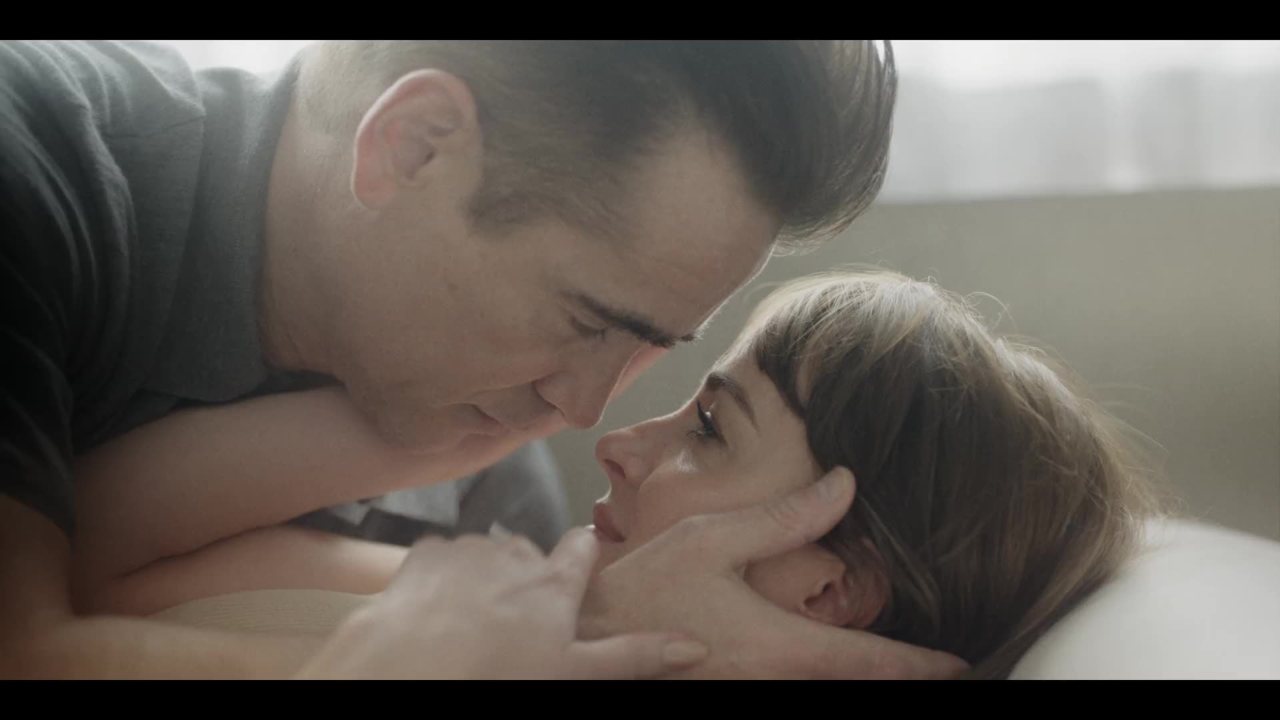
Think about inserts too. On a terrace, a close-up on a lighter engraved "happy birthday dad" gives information without a single line of dialogue. In the table, it's one row. On set, it's quick if it's planned, and often forgotten if it isn't.
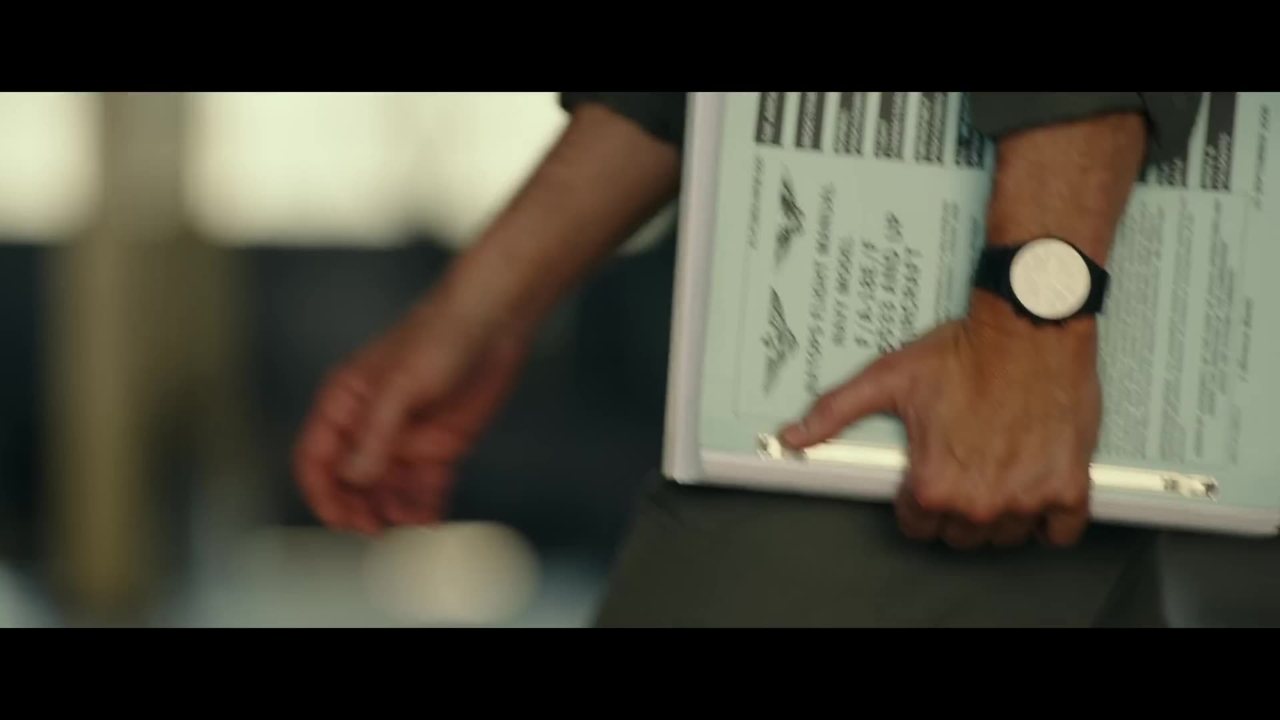
Even a commercial benefits. For a video for a café-restaurant in Rennes, an agency had to film the dining room by day, the terrace, the facade and the dining room at night. Four spaces, two lighting moods. Without a breakdown, that's the kind of shoot where you go home without the facade.
The mistakes that come back on every shoot
The first is forgetting the listening shots. If all you have is the person speaking, you can't cut a line in the edit without a visible jump. The reverse on Georges, above, works as much when he's silent as when he talks.
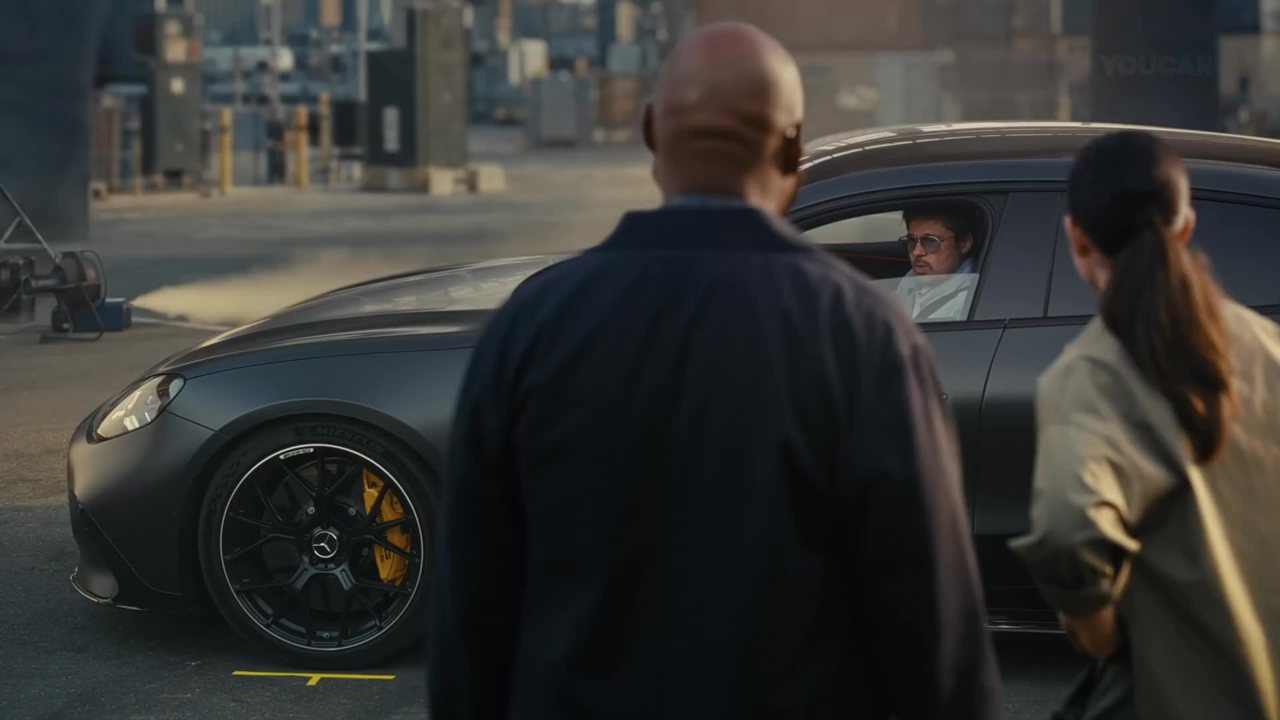
Second mistake, no establishing shot. The viewer needs to understand where the characters are before you move in on them. The master of sequence 3 plays that role.
Third mistake, overestimating camera moves. On paper a dolly shot is a line. On set, it's tracks, a crew and time. If the location scout shows you the street is too narrow, keep the intent and change the method. A pan can do the work of a dolly.
Fourth mistake, shooting too many shots "to feel safe." Every extra shot eats time from the ones that matter. The whole point of the breakdown is to choose.
When you write it, stay factual. No pretty sentences, action verbs. Name the characters instead of writing "he" or "she," otherwise nobody knows who's in frame at shot 14. Avoid the opposite excess too. A shot with no angle, no movement and no intent is useless on set.
Do your location scouting before locking the table. Breaking down a location you've never seen means writing shots you'll rewrite. Then reread each shot three times. On its own, then with the one before and the one after, and finally in the whole film.
Some directors skip it, and people often say Godard never did one. That's a director's choice. But to skip it, you have to know what you're losing.
An exercise to learn breakdowns
The most effective way is to work backwards. Pick a dialogue scene you love, grab its frames (paste the link into Scenorama and choose extraction by shot change), then rebuild the breakdown line by line. Size, angle, movement, sound. You'll quickly see where the director placed the listening shots.
Then write two breakdowns of the same scene. One calm, with a few long shots. The other nervous, with lots of short shots. Shoot both, even on your phone, and cut them side by side. That's where you'll understand everything your table decides before you even turn the camera on.
Frequently asked questions
What's the difference between a technical breakdown and a storyboard?
The storyboard draws the shots to prepare the compositions and the look of the film. The technical breakdown describes each shot in writing, with size, angle, movement, lens and sound. The two complement each other, but the storyboard doesn't replace the breakdown.
Who writes the technical breakdown?
The director, after the script is written, often with the help of the first AD. The shot numbering is then used by the AD to build the shooting schedule.
Should you note sound in a technical breakdown?
Practices vary. Some professionals say they almost never see it, while some schools list forgetting it among the common mistakes. As soon as a sound carries information (a tick-tock, an off-screen noise), write it down.
How do you number the shots in a breakdown?
The most common way is scene number, point, shot number (3.1, 3.2). Some prefer letters (12A, 12B). Either way, a simple reframe doesn't count as a new shot.
Try it on your own video
Paste a YouTube, TikTok, Instagram or Vimeo link. Scenorama extracts the frames, you annotate them and export your moodboard as a PDF.
Franck MeyerVideographer, Founder of Scenorama