Camera Angles, What Each One Makes the Audience Feel
High angle, low angle, eye level. What each camera angle makes you feel, with Citizen Kane, Psycho, E.T. and the traps to avoid on set.
 Franck Meyer ·
·
15 min read
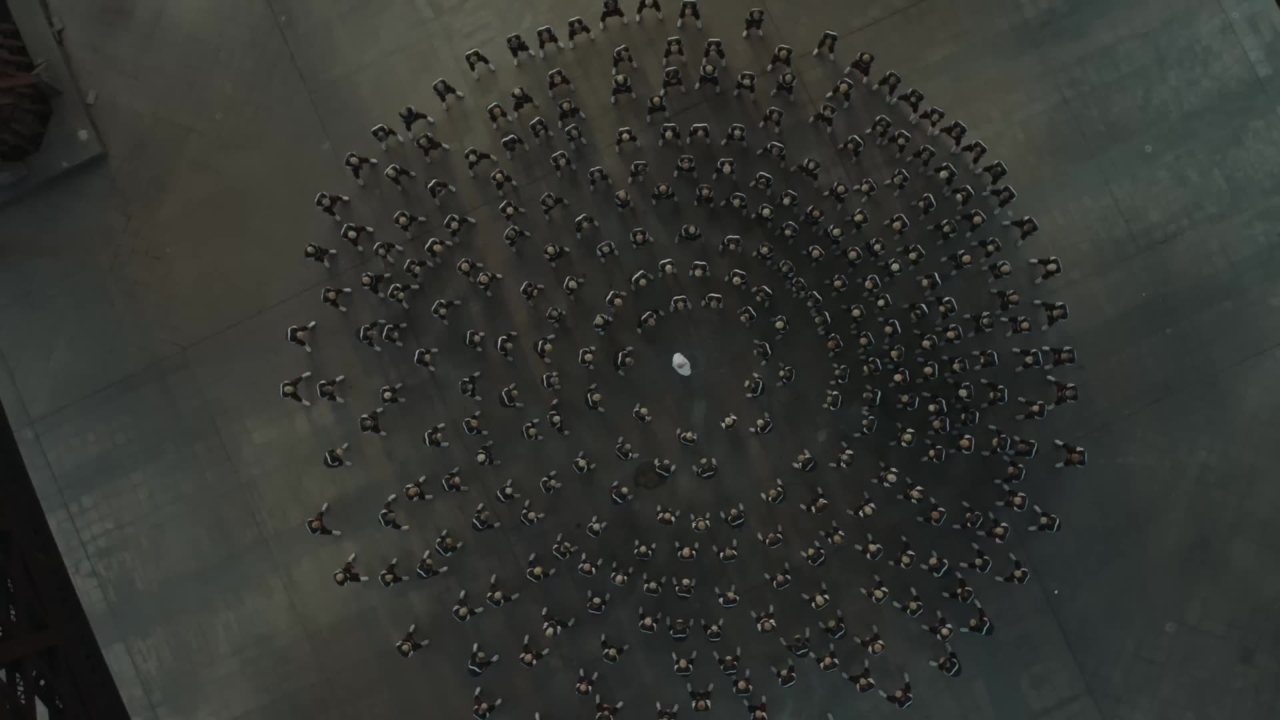
A low angle doesn't automatically make a hero. That's the first trap with camera angles, and almost everyone falls into it early on. You learn that a low camera makes people look bigger and a high camera makes them look smaller, then you apply the rule everywhere. The result is shots that repeat what the dialogue already says, only heavier.
Still, the three basic angles (high angle, low angle, eye level) really do work on the viewer. Psychology studies back this up, with some caveats. The whole question is what they produce, when, and at what cost on set.
Because an angle also has very down-to-earth consequences. The ceiling that suddenly creeps into frame. The sky blowing out behind your actor. The mic you have to hide somewhere. A good angle is an effect on the audience and a problem solved on set.
An angle is a tilt before it is a height
The definition is more precise than most people think. The camera angle is the angle formed, in a vertical plane, between the camera's optical axis and the horizontal. The word is sometimes also used for the angle between the camera axis and the main axis of the characters. But on set, when people say angle, they almost always mean that vertical tilt.
By default, you shoot more or less level. When the viewpoint is higher than the subject and the camera looks down, it's a high angle. When it's lower and the camera looks up, it's a low angle. The Académie française defines the French term as a "shot where the camera axis points from bottom to top." Here's a bit of French trivia for you. Since the 1990 spelling reforms, you're even allowed to write "contreplongée" as one word. Nobody does, but it's allowed.
This definition has a practical consequence people often forget. A camera placed high but perfectly horizontal is not a high angle in the strict sense. It's high, that's all. Conversely, a camera set near the floor and kept level is not a low angle. People often say Yasujirō Ozu shot with a very low camera, at the height of a person sitting on a tatami, without tilting it toward the ceiling. It's the textbook example of a low camera that doesn't play the power card.
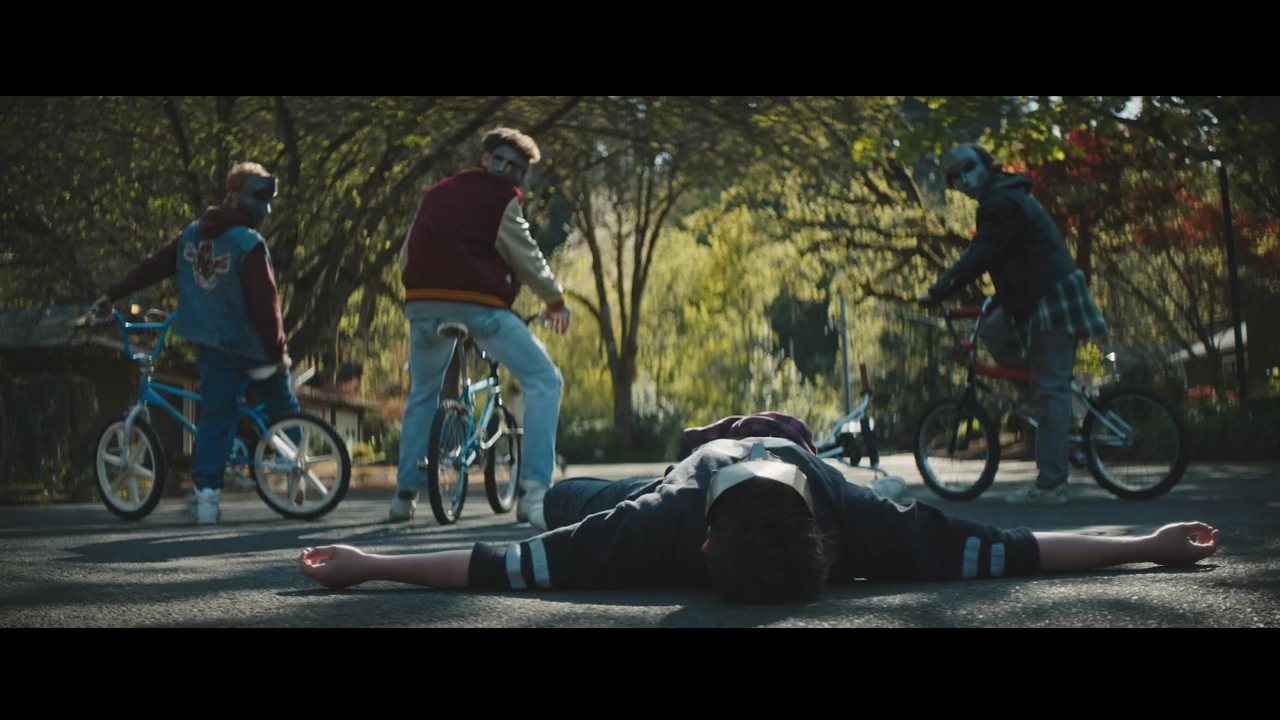
In practice, height and tilt often go together, because you have to keep the subject in frame. Still, keep the distinction in mind. What produces the effect is mostly the direction the camera looks and the way the lines of the set converge upward or downward.
If you work with a French-speaking crew, a low angle is a contre-plongée and a high angle is a plongée. The extreme low angle, camera almost on the ground looking at the sky, is called a worm's eye view. The vertical high angle, camera looking straight down at the ground, is a bird's eye view or an overhead shot.
In French, you'll hear "plongée totale" or "vue zénithale" for that top-down shot. Some teaching sheets describe the plongée totale as a view "at 180°" above the subject. That doesn't hold up. Relative to the horizontal, a camera looking straight down is tilted 90°. Say "overhead" or "top-down" and everyone will understand, and nobody will pull out a protractor.
That leaves eye level. The camera is at the subject's height, axis horizontal. It's presented as the neutral point of view, the one that helps the audience put themselves in the characters' place. Neutral is easy to say. It all depends on whose eyes you mean.
A bit of history to wrap up the vocabulary. These terms don't come from cinema. They come from painting, then photography. Painters were already doing low angles on painted ceilings, which were called di sotto views, "views from below." When you frame from below, you inherit a problem that's several centuries old. Showing a figure the way someone standing beneath it sees it.
The low angle makes people bigger, but it doesn't always flatter them
The best-known effect of the low angle is power. The subject dominates the frame, gains height, can become threatening. Monster movies made it their textbook case. People often cite King Kong (1933) climbing the Empire State Building and Godzilla (1954) wrecking Tokyo. The monster is shot the way the fleeing humans see it, from the ground. It's already big, and the camera makes it huge.
The most famous case remains Citizen Kane (Orson Welles, 1941). Its cinematographer, Gregg Toland, wrote about it in American Cinematographer the year the film came out. "Many of our camera angles were planned for unusually low camera setups." So it's not a one-off effect. It's a choice that runs through the whole film.
The scene where Leland comes to confront Kane after his election defeat is shot entirely in low angle. For the lowest shot, the crew cut into the concrete floor, and Toland put the camera in the hole. Kane looks immense, as if he were about to bump his head on the ceiling.
That's where the example gets interesting. Kane has just lost. The low angle doesn't celebrate a victory. It shows a man too big for the room, stuck between floor and ceiling, at the moment the game slips away from him. The power is there, but it's spinning in neutral. The same angle that glorifies a hero can make a character overbearing, even a little ridiculous.
This example also points to a constraint the textbooks skip over. A camera that low sees the ceiling. So the sets of Kane got ceilings, made of muslin. The fabric hid the mics placed above, and the lights were set on the floor. One angle choice changed how the sets were built, where the sound was placed and all the lighting of the film.
On your shoot, it's the same thing on a smaller scale. Indoors, a low angle shows you the ceiling, its recessed lights, the air vent, sometimes your boom pole. Outdoors, it gives you sky, often much brighter than your subject. Think about both before you put your camera on the ground.
But the low angle isn't only for making people bigger. It's also the viewpoint of the child, the kneeling prisoner, the wounded person on the ground. It's the victim's look up at whoever dominates them. In that case, the effect works as much on the one looking as on the one being looked at. The audience doesn't find the other person big. They feel small.
It can also express a character's unease in front of something too big for them. A low angle on buildings doesn't say much about the buildings. It talks about the person looking up at them. And sometimes it says nothing at all. Shooting the Eiffel Tower from below simply shows it the way any passerby sees it, at human height.
Finally, it can make a character bigger morally or, on the contrary, underline their flaws. People often cite General Ripper in Dr. Strangelove, shot from below while he smokes his cigar. The angle is a warlord's, but the effect is comically menacing. The camera takes seriously a man who shouldn't be taken seriously, and that mismatch is what makes you laugh. People also cite Sergeant Hartman in Full Metal Jacket, when he screams at Joker. The domination is there, and there's nothing admirable about it.
One last setting changes the effect a lot, the focal length. With a short focal length, a wide-angle lens, both low and high angles are much more pronounced. Verticals converge more, proportions stretch. On a telephoto lens, the same tilt looks much gentler. If your low angle isn't working, before dropping the camera even lower, try moving closer with a wider lens.
The high angle crushes, and sometimes it hides
The high angle does the opposite, at least on the surface. It crushes. The character shrinks, the ground surrounds them, they can become a mere detail in the shot. Teaching sheets link it to confinement, submission, inferiority, unease. It's also described as the victor's look at the vanquished. And like the low angle, it can simply be a character's point of view, someone leaning out of a window or standing at the top of a staircase.
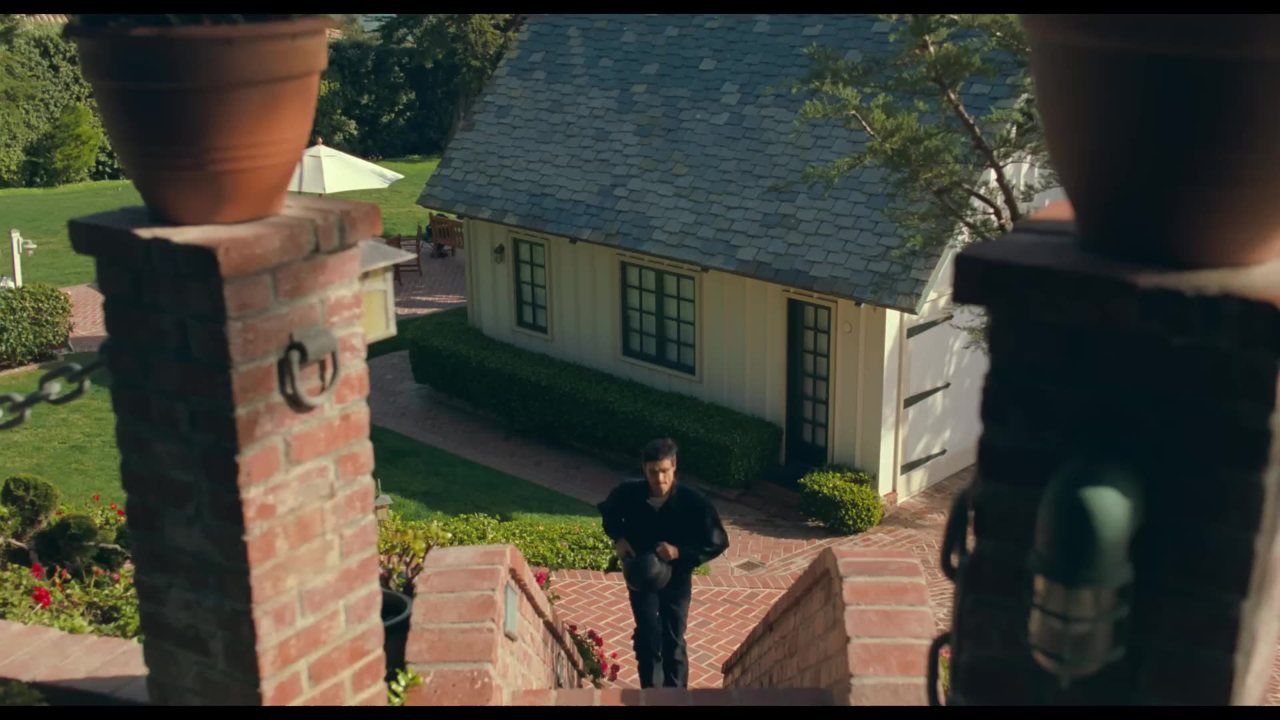
The example that interests me most goes somewhere else, though. In Psycho (Alfred Hitchcock, 1960), the detective Arbogast climbs the staircase of the Bates house. Once he reaches the top of the steps, the film cuts to an overhead view. You see the scene from above, and "Mother" comes out of her bedroom with a knife. Then Hitchcock cuts abruptly to a close-up of Arbogast's slashed face. To get that viewpoint, the camera was placed in a rig hanging from rails fixed to the ceiling.
Why go that high? Hitchcock explained it to Truffaut. First reason, shooting Mother from above lets him avoid showing her face without it being noticeable. Shot from behind, it would have looked like her face was being hidden on purpose, and the audience would have grown suspicious. Seen from above, the concealment disappears.
Second reason, and for him the main one, contrast. The very wide shot from above, then the sudden close-up. Hitchcock compares it to music, with violins for the high shot and brass for the close-up. "The high shot with the violins, and suddenly the big head with the brass." So the high angle isn't there to crush Arbogast. It builds a distance that the edit destroys in one stroke. It's a tool of rhythm as much as a tool of meaning.
Later in the film, when Norman carries his mother to the fruit cellar, Hitchcock again has to shoot from above. This time, he makes the camera rise continuously, with no cut. He said it himself, a sudden jump to a high-angle shot would have tipped off the audience. A change of angle gets noticed. When you don't want it noticed, you cover it with a movement.
Remember this scene. A high angle can hide information, set the rhythm of an edit, set up a shock. "Crushing the character" is only one of its functions, and not necessarily the most useful.
On set, the high angle has its own constraints. You need height, so a ladder, a balcony, a pole or a drone outdoors. It shows you the floor, so cables, actor marks, light stand bases. And an overhead shot indoors forces you to light without your sources entering the frame. That last point is often what decides whether the shot is feasible.
Eye level, but whose eyes?
Eye level often passes for the absence of a choice. Camera at face height, horizontal axis, neutral point of view. It does put the audience on equal footing with the character. But it hides a decision many people make without realizing it. Whose eye level?
E.T. the Extra-Terrestrial (Steven Spielberg, 1982, cinematography by Allen Daviau) answers in a radical way. The camera stays mostly at a child's eye level. For much of the beginning of the film, adults are shot without heads, or from the waist down. They exist, they talk, they act, but they remain faceless bodies. The world of the film is Elliott's and his friends', and adults only partly enter it.
It's the best demonstration that height alone already tells you something. You don't need a spectacular tilt to make adults feel distant. You just have to choose what height the film lives at.
So what's "neutral" depends on the character. A tall adult's eye level means a slight high angle on a child. A child's eye level means a world where adults lose their faces. When you frame a scene between two characters of different heights, decide at what height the scene plays, and stick to that decision. Otherwise, you change point of view with every shot/reverse shot without meaning to.
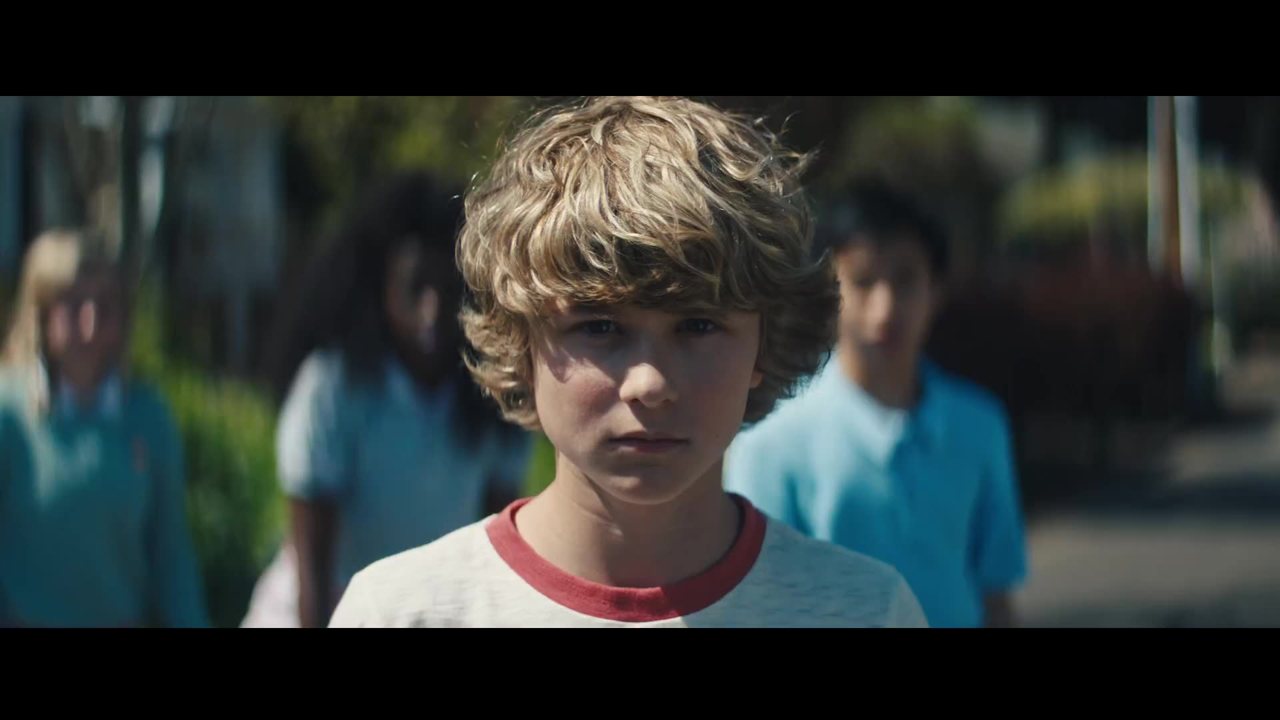
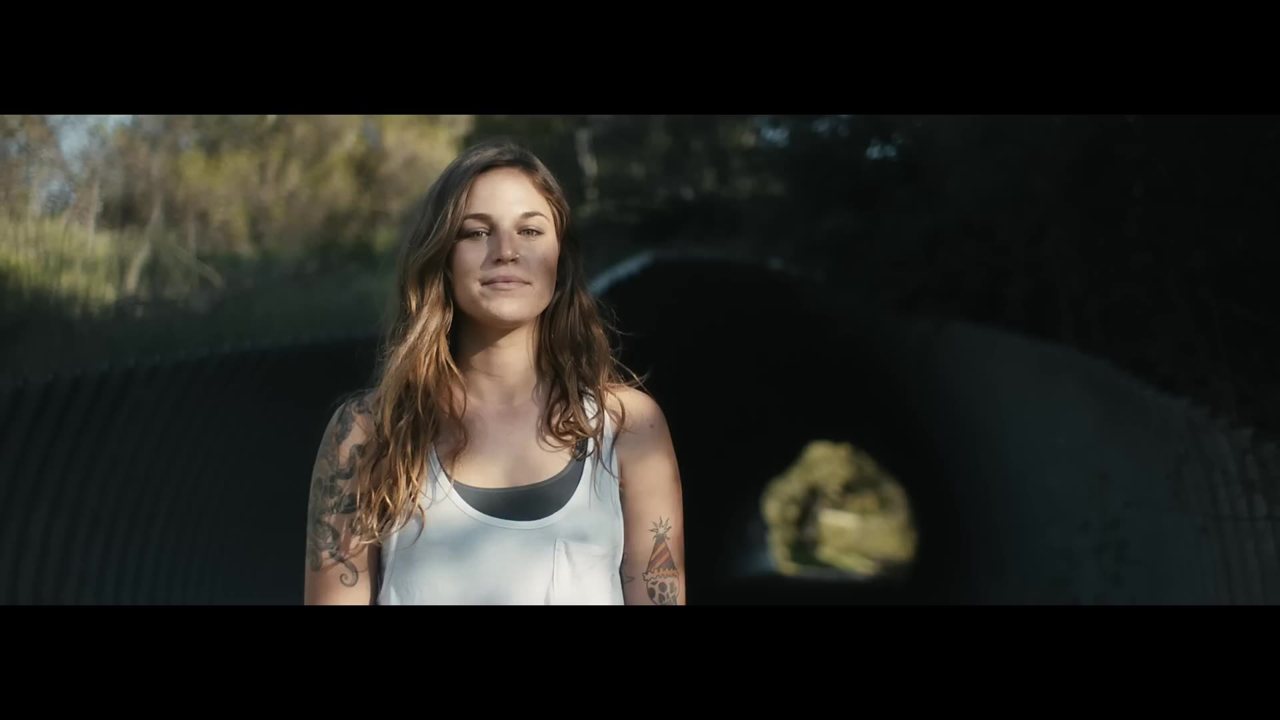
Eye level is also the angle of interviews, and for a good reason. A scientific source notes that a speaker looks more credible when few shots are not at eye level. For a corporate video, a testimonial or an executive portrait, the temptation of a low angle "to give authority" is strong. Mostly, it risks making the speech less trustworthy. Keep the camera at eye level. If you want presence, work on shot size, lighting and eyeline.
What studies actually measure
These effects aren't just a film critic's hunch. In 1987, Kraft showed participants short picture stories. The low angle gave an impression of strength, action and superiority. Eye level, an impression of equality. The high angle, an impression of weakness, passivity and insignificance. Exactly what the textbooks repeat.
Other studies point the same way. Mandell and Shaw already found the power effect of the low angle in 1973, and Sevenants and d'Ydewalle did too in 2006. But a 1987 study, by Meridian, doesn't find it. The effect exists, but it isn't guaranteed. It depends on context, on the story, on what the character is doing in the shot.
The most surprising result is more recent. One study has an unambiguous title. Teaching viewers how camera angle works does not reduce its effect on their judgments of power. You know the technique, you can name it, and it works on you anyway.
My takeaway for the shoot is that the angle is a real but moderate lever. It pushes an interpretation, it doesn't force one. If your scene says the opposite of your angle, the scene wins. Your angle then becomes irony, like with Ripper in Dr. Strangelove, or just a clumsy choice.
The traps that come up on almost every shoot
Confusing height and tilt. Putting the camera on a ladder without tilting it doesn't make a high angle. You get a high shot, with a horizon placed differently in the frame. If you're after the crushing effect, you have to tilt the axis, not just raise the stand.
Giving each angle a fixed meaning. A low angle doesn't always mean "power." It can mean unease, a character's flaws, or just be a point-of-view shot, like the Eiffel Tower seen by a passerby. Before you choose, ask yourself who is looking, not just who is being looked at.
Gluing an angle to a character for the whole film. The choice between high and low angle doesn't have to be locked in for each role. The strongest low angles land at the moment a character's balance of power shifts. A character shot at eye level for an hour, then framed from below when they make a decision, gains far more than if they'd been shot from below from their first appearance.
Overdoing it. The low angle works best when it's saved for a specific moment. A victory, a decision, a reversal. A slight low angle is often enough, barely a few degrees. Extreme angles are better suited to an entrance or a point-of-view shot. If your whole film is in low angle, nothing is.
Forgetting focal length. The same tilt on a 24mm and on an 85mm doesn't produce the same effect. Angles are more pronounced on a wide lens. If your shot looks too cartoonish, go longer and step back. If it looks too timid, do the opposite.
Forgetting the set that the angle reveals. A low angle shows the ceiling or the sky. A high angle shows the floor. That's exactly why Citizen Kane had to build ceilings and hide its mics in them. Walk around your frame thinking about what's above and below your subject, not just behind them.
Changing angle for no reason. A sudden jump from an eye-level shot to a high angle draws attention. Sometimes that's intended, like with Arbogast. Sometimes it's a leak of information, and Hitchcock avoided it by making the camera rise continuously. If the change of angle isn't the event, cover it with a camera move or a movement from the character.
Pronounced angles in interviews. That's the corporate video trap. You want dynamism, you stack up low and high axes, and the speaker loses credibility. Look for dynamism in the edit and in the cutaways, not in the camera tilt on the person speaking.
How to choose your angle before you shoot
When I'm breaking down a scene into shots, I always go in the same order. It takes two minutes per scene and it avoids most of the traps.
- Decide who is looking. Is the shot subjective, a child's, a wounded person's, a character at the window, or outside the scene?
- Choose the height the scene lives at, an adult's, a child's or a seated person's.
- Spot the moment the balance of power tips. That's where your pronounced angle has the best chance of counting.
- Dose the intensity. A few degrees for a dialogue scene, an extreme angle for an entrance or a point-of-view shot.
- Check what the angle shows above or below the subject, ceiling, sky, floor, cables, mic.
- Pick the focal length accordingly, wide-angle to accentuate, longer lens to soften.
- Plan the transition. An angle that arrives with a cut gets noticed, an angle that arrives with a move gets forgotten.
To train your eye, take a dialogue scene you love and grab all of its frames. Paste the link into Scenorama and choose extraction by shot change, and you'll have one frame per shot in front of you. For each one, note the camera height and its tilt. Look at how many angles are really pronounced, and at what point in the scene they show up.
Then, on your next shoot, film the same line under three angles. A slight high angle, eye level, a slight low angle. Cut the three versions back to back and show them to someone who hasn't read the script. Ask them only who, in their view, holds the power in the scene. Their answer will teach you more about angles than any definition.
Frequently asked questions
What's the difference between a high angle and a low angle?
In a high angle, the camera is higher than the subject and looks down. In a low angle, it's lower and looks up. The first tends to crush or isolate the subject, the second to make them bigger, but the context of the scene can reverse these effects.
Does a camera placed high always make a high angle?
No. The camera angle is measured between the optical axis and the horizontal. A camera that's high but kept level gives a high shot, not a high angle in the strict sense.
Which angle should you pick for an interview?
Eye level, in the vast majority of cases. A scientific source notes that a speaker looks more credible when few shots are not at eye level. To give presence, work on shot size and lighting instead.
What do you call a vertical high angle?
In English, it's a bird's eye view or an overhead shot, and in French, a plongée totale or vue zénithale, with the camera looking straight down at the ground. It's the viewpoint Hitchcock uses for Arbogast's murder in Psycho.
Try it on your own video
Paste a YouTube, TikTok, Instagram or Vimeo link. Scenorama extracts the frames, you annotate them and export your moodboard as a PDF.
Franck MeyerVideographer, Founder of Scenorama