Camera Movements Explained, Pan, Dolly, Zoom and Dolly Zoom
Pan, dolly, zoom, dolly zoom. What each move brings to the story and how to stop confusing a zoom with a dolly in.
 Franck Meyer ·
·
9 min read
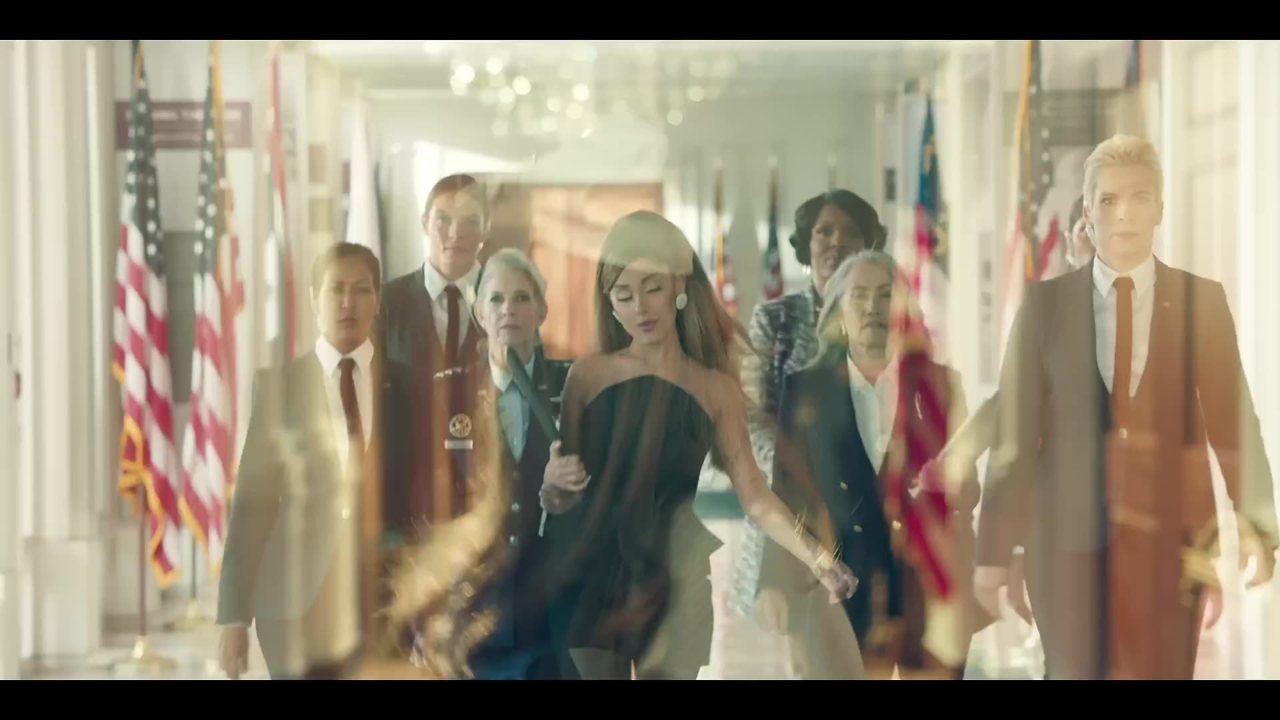
A pan and a dolly shot have nothing to do with each other, even though both make the image move. To read camera movement, start with one simple idea. Either the camera pivots on its tripod, or the tripod itself moves. The first is a pan. The second is a dolly shot (or tracking shot). Everything else, from zoom to dolly zoom to complex camera paths, builds on that distinction or plays with it.
Before we even talk about movement, there's the locked-off shot. And between the two, there are tiny frame adjustments, like when the operator follows an actor leaning forward. Those are reframes. You almost never notice them, and that's the point.
A pan turns its head without taking a step
In a pan, the tripod stays planted on the ground and only the camera pivots. Horizontally, from a few degrees up to a full turn. Vertically, tilting toward a high angle or a low angle. Or in every direction at once. It's the move of a viewer standing still who turns their head to see what's happening next to them.
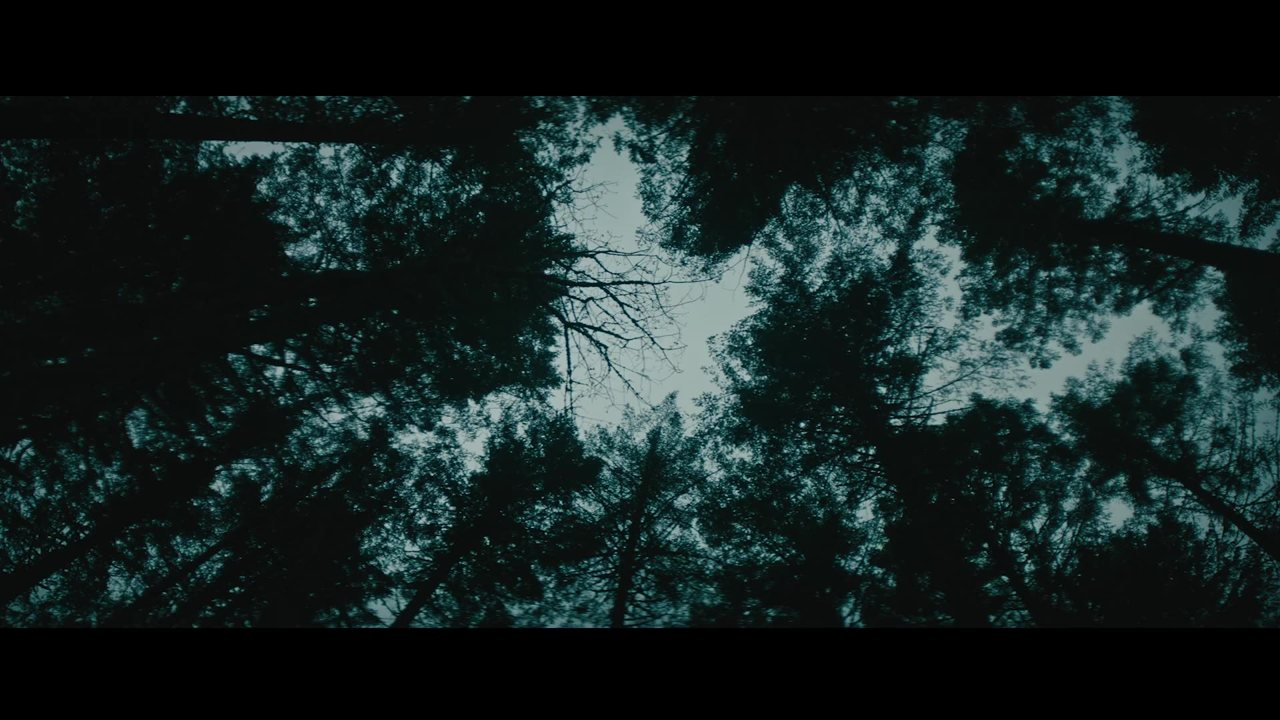
What makes a pan interesting is what it goes looking for off screen. In Stagecoach (John Ford, 1939), a gentle pan first follows the stagecoach. Nothing alarming. Then the movement suddenly speeds up, on the brass, and reveals the Apaches who were just outside the frame. The pan stops being descriptive. It uncovers a threat, and the music underlines the move.
Another textbook case is Jean Renoir's The Crime of Monsieur Lange (1935). The camera sits in the middle of the courtyard and pans 360° to the left. Lange leaves the frame on the right. The camera keeps rotating and picks him up again as he comes back in from the left to stab Batala. The Caen film club calls it probably the most famous pan in cinema. You can see why. The camera seems to get ahead of the character, as if it already knew where he was going to strike.
The classic mistake is calling a pan any move where the camera slides along a set. If the tripod moves, it's no longer a pan. It's a lateral tracking shot.
A dolly shot pulls the viewer into the set
A dolly shot is the camera physically traveling. On the ground, on a cart rolling along rails. In the air, at the end of an articulated arm. During the move, the shooting axis stays parallel to a single direction. Depending on the direction, you'll hear dolly in, dolly out, lateral tracking, or circular tracking.
The idea isn't new. In 1896, Alexandre Promio, a cameraman for the Lumière brothers, set up his camera on a moving boat. It's considered the first tracking shot in history.
Where a pan looks, a dolly shot takes you in. In Paths of Glory, Kubrick moves the camera slowly and steadily along the soldiers in the trench. The shot describes the place, but above all it puts you there. You're not watching the soldiers wait from a distance. You go through it with them.
As a rule, a dolly in focuses attention and builds tension. A dolly out does the opposite. It reveals context and releases the pressure. These are tendencies, not laws, but they're a good starting point when you're breaking down a shot list.
When a single move combines a dolly and a pan, you're talking about a camera path. With a Steadicam, the camera can chain these kinds of moves over long distances. The Copacabana shot in Goodfellas (Scorsese, 1990) was done that way, by Larry McConkey, the first student of Garrett Brown, the inventor of the Steadicam. Henry brings Karen in through the service entrance, through the hallways and the kitchen, and ends up at a table set up for them right in front of the stage. The shot lasts about 2 minutes 59 according to Cinephilia & Beyond (other sources say two and a half minutes), set to "Then He Kissed Me" by the Crystals. It was blocked, lit and shot in half a day, and the good take was the eighth.
The movement tells you about Henry's power. No waiting in line, every door opens for him. Why the kitchen? According to McConkey, it was cinematographer Michael Ballhaus who insisted on going through it. Scorsese asked him why, and Ballhaus answered, "Because the light is beautiful." There's also a story that going through the back came from a refusal to use the main entrance. Take that one as a legend. CBR says it couldn't find a single Scorsese quote confirming it.
A zoom and a dolly in don't feel the same
This is the most common mix-up, and it has consequences. A zoom doesn't move the camera. Only the focal length changes, which simulates getting closer or farther away. The word refers both to the variable focal length lens and to the effect it produces on camera. It's sometimes called an optical dolly, as opposed to mechanical dolly shots. And a very fast zoom in has a vivid name too, the crash zoom.
It all comes down to perspective. A zoom doesn't change it. It only changes the apparent distance of the subject. A dolly shot changes the point of view, so the planes of the set slide against each other. The result is that a zoom in looks flatter than a dolly in of the same magnitude. One formula sums it up well. A dolly feels like walking toward the subject, a zoom feels like looking at it through binoculars.
A zoom also has side effects. As you magnify, depth of field shrinks. And at the telephoto end, the background seems to move closer to the subject, as if squeezed up against it.
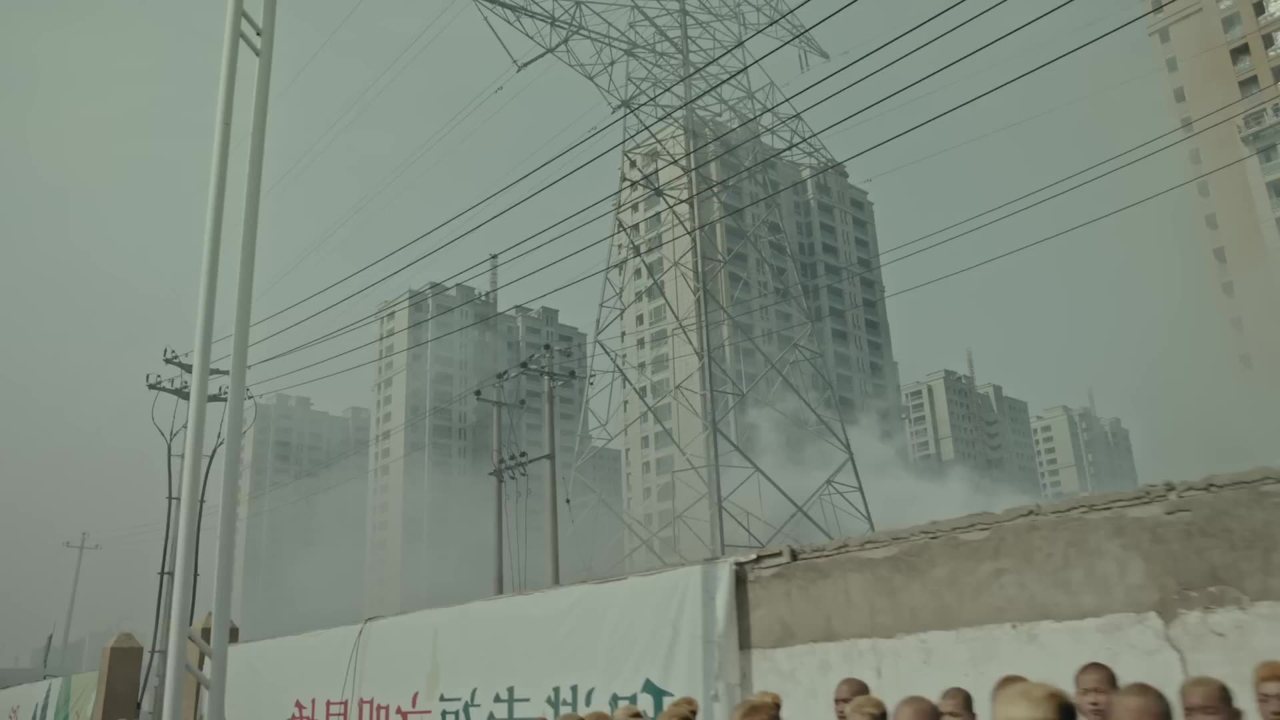
To tell the difference on screen, look at the relationship between foreground and background.
- If nearby elements move faster than the background, there's parallax. The camera is moving, so it's a dolly shot.
- If the whole image magnifies as one block, with nothing sliding, it's a zoom.
- If the frame sweeps across the set but near and far objects keep roughly the same relative positions, the camera is pivoting in place. It's a pan.
This isn't just a matter of vocabulary. If you write "zoom" in your shot list when you want the feeling of moving into the room, you risk getting a flat shot. And in the edit, you won't understand why it doesn't work.
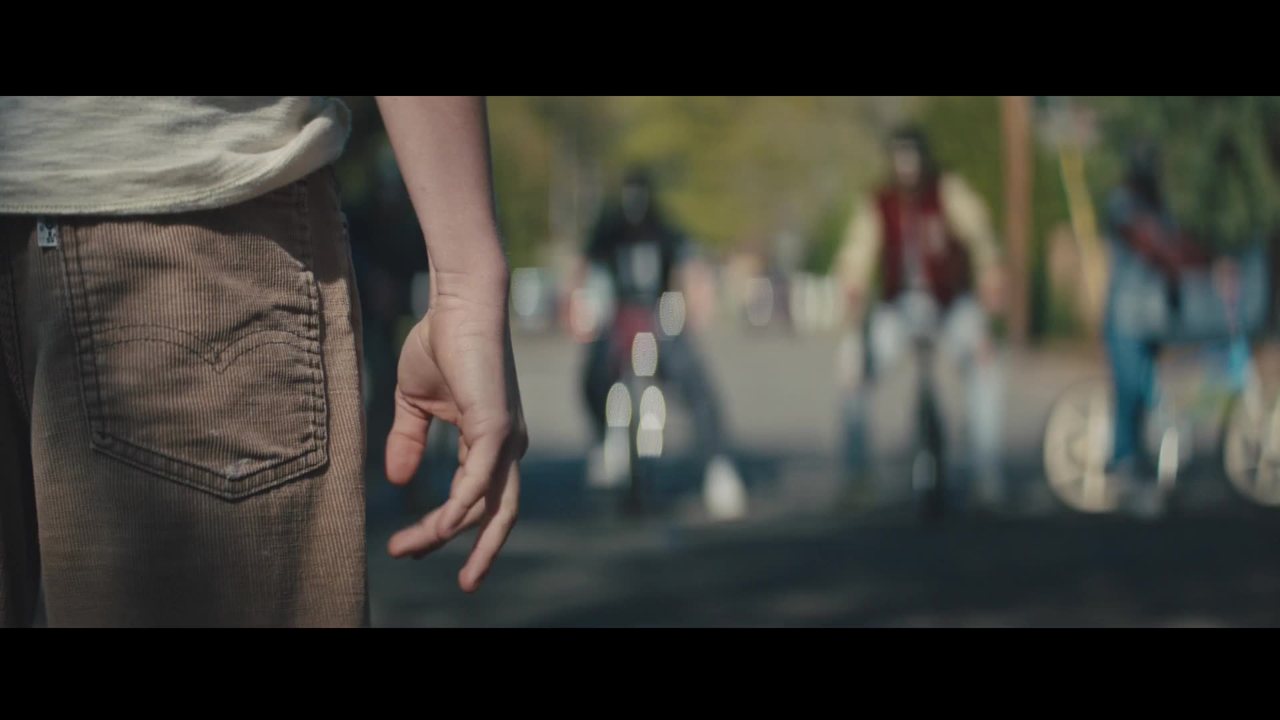
The dolly zoom, when the two movements fight each other
What if you do both at the same time, in opposite directions? That's the dolly zoom, also called the Vertigo effect or the contra-zoom. You combine a zoom out with a dolly in, or the other way around. The subject stays the same size in the frame, but the background warps. It stretches or compresses, and the viewer feels that something is off.
The name comes from Vertigo (Hitchcock, 1958). The technique was invented by Irmin Roberts, a second unit cameraman who isn't even credited in the titles. The effect shows up twice. First during Scottie's first attack, in a POV shot toward the alley, with a zoom in and a dolly out. Then when he climbs the stairs of the bell tower. Hitchcock told Truffaut that he'd wanted this effect since Rebecca, for Joan Fontaine's fainting during the inquest, but nobody had been able to pull it off. He says he'd been thinking about it for fifteen years.
For the bell tower, a full-scale set would have cost $50,000. So the production built a miniature of the stairwell, laid on its side. The final cost varies depending on the source. Hitchcock says $19,000, American Cinematographer says $1,900.
The direction of the movement changes everything. In Jaws (Spielberg, 1975), Brody watches from the beach as the boy on his raft is attacked. The camera moves toward him while the lens zooms out. The background pulls away, and that's the shock. The Hollywood Reporter lists this shot, inspired by Vertigo, among the standout images from cinematographer Bill Butler. Conversely, a dolly out combined with a zoom in makes the background close in on the character. Scorsese uses it in the diner scene of Goodfellas, and the feeling is of being trapped.
Technically, it all rests on synchronization. If the speed of the dolly and the speed of the zoom drift apart, the subject's size changes and the illusion collapses. And without a dramatic reason, the effect quickly turns into a gimmick.
No camera movement is neutral
In July 1959, in a roundtable on Hiroshima mon amour published in Cahiers du cinéma, Godard said "tracking shots are a matter of morality." He was flipping a line from Luc Moullet, "morality is a matter of tracking shots." The phrase stuck because it says something true. Moving the camera means choosing how to look.
Two years later, Jacques Rivette gave the harshest illustration. In "De l'abjection" (Cahiers du cinéma no. 120, June 1961), he attacks a shot from Pontecorvo's Kapò. Emmanuelle Riva throws herself onto the electrified barbed wire, and a dolly in comes to reframe her corpse from a low angle, her raised hand placed in a corner of the frame. For Rivette, the director deserves nothing but "the deepest contempt." The text has become a reference on the link between form and morality, and Serge Daney responded to it decades later.
You don't need to film a camp for the question to come up. A slow dolly in on someone in distress, a crash zoom on a crying face, those are decisions. The viewer feels them even if they can't name them.
To practice, take a scene you know by heart and break it down shot by shot. To grab the frames, paste the link into Scenorama and pick the extraction by shot change. Then, for every shot that moves, compare the start and the end of the movement. If the foreground has slid relative to the background, it's a dolly shot. If everything has magnified as one block, it's a zoom. Next to it, write down what the movement makes you feel. After three or four scenes, you'll know exactly which one to ask for on your next shoot.
Frequently asked questions
What's the difference between a zoom and a dolly in?
A dolly in physically moves the camera toward the subject, while a zoom only changes the focal length. A zoom doesn't change perspective, so the image magnifies as one block and looks flatter. A dolly makes the planes of the set slide against each other and gives the feeling of moving forward.
What is a dolly zoom?
It's a dolly shot combined with a zoom in the opposite direction, also called the Vertigo effect or contra-zoom. The subject stays the same size in the frame while the background stretches or compresses. It's credited to Irmin Roberts, a second unit cameraman on Hitchcock's Vertigo.
How do you tell a pan from a lateral tracking shot?
In a pan, the tripod stays fixed and the camera pivots on itself. In a lateral tracking shot, the tripod moves along the set. On screen, a tracking shot gives itself away through parallax, with nearby objects moving faster than the background.
What is a reframe?
It's the smallest of camera movements, a slight adjustment of the frame to follow an actor who moves a little. It almost always goes unnoticed, and that's intentional.
Try it on your own video
Paste a YouTube, TikTok, Instagram or Vimeo link. Scenorama extracts the frames, you annotate them and export your moodboard as a PDF.
Franck MeyerVideographer, Founder of Scenorama